
A Frustrating Problem That's More Common Than You Think
You press the button on your garage door remote, watch the door start its descent, and then — right before it reaches the floor — it reverses and goes back up. You try again. Same thing. Maybe it works on the third try, maybe it doesn't. Either way, you're standing in your driveway in Mohnton wondering what just happened.
This is one of the most common garage door complaints we hear from homeowners throughout Berks County. The good news is that a reversing garage door usually isn't a sign of a catastrophic failure. The bad news is that ignoring it can lead to bigger problems — or leave your garage wide open when you're not home.
Let's walk through the most likely causes, what you can check yourself, and when it's time to call a professional.
Understanding Why Your Garage Door Has Safety Reversals
Before we get into troubleshooting, it helps to understand why your garage door is designed to reverse in the first place. Federal law has required garage door openers to include auto-reverse mechanisms since 1993. These safety features prevent the door from closing on a person, pet, or object in its path.
There are two main safety systems at work:
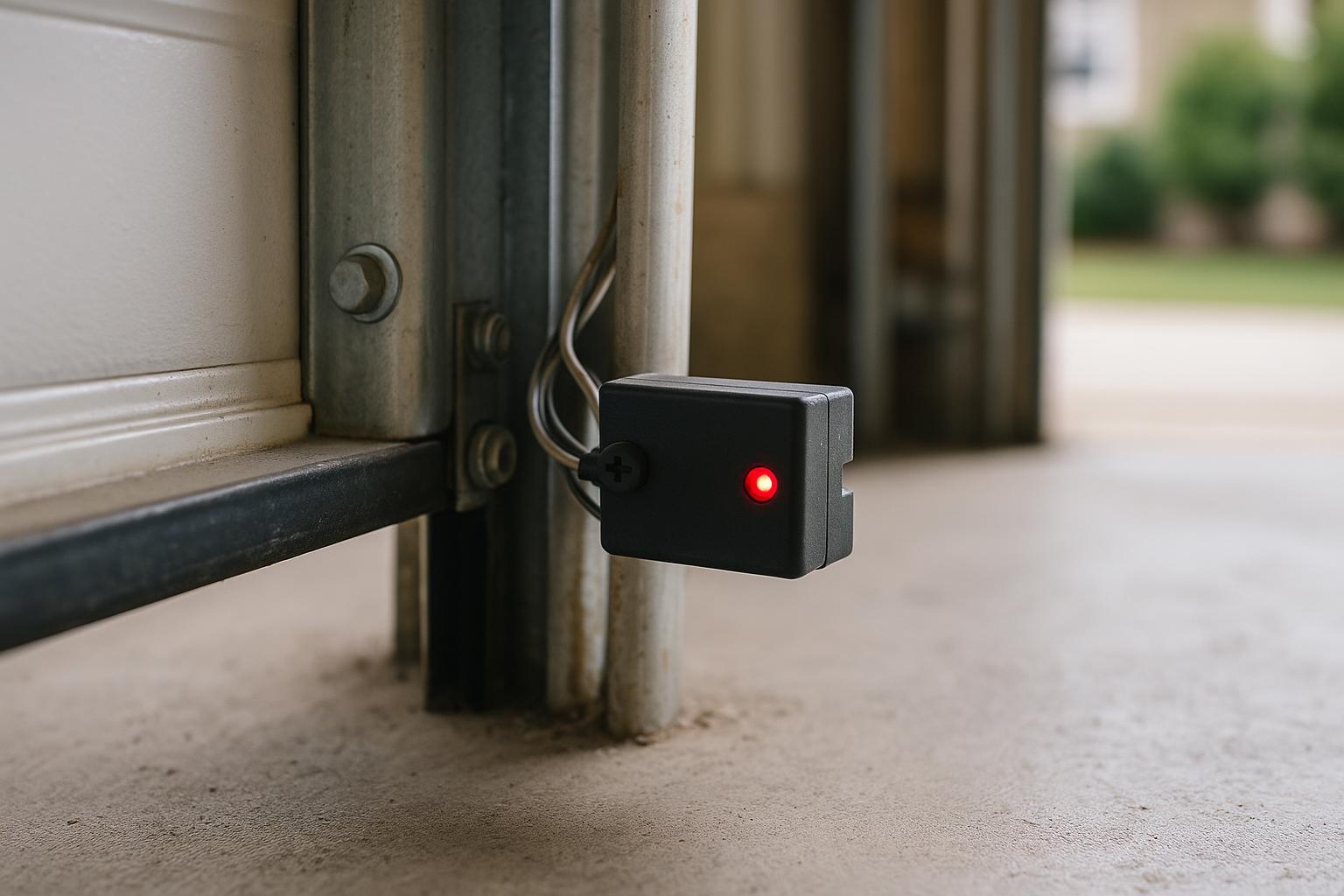
- Photo-eye sensors: These are the small sensors mounted near the bottom of your garage door tracks on either side. They project an invisible beam across the opening. If something breaks that beam, the door reverses.
- Mechanical auto-reverse: If the door encounters physical resistance while closing — like hitting an object or binding in the tracks — it's designed to reverse direction.
Both systems are essential for safety, but when they malfunction, they can cause your door to reverse even when nothing is actually in the way.
The Most Common Causes of Unwanted Reversals
1. Misaligned or Dirty Photo-Eye Sensors
This is the number one reason garage doors reverse unexpectedly. The photo-eye sensors on either side of your garage door opening need to be perfectly aligned with each other to maintain their infrared beam. Over time, they can get bumped, shifted by vibration, or simply accumulate dirt, cobwebs, and grime.
Here's what you can check:
- Look at the indicator lights on both sensors. Typically, one will have a steady green light and the other a steady amber or green light. If one is blinking, the sensors are misaligned or obstructed.
- Wipe both sensor lenses with a soft, dry cloth.
- Make sure nothing is blocking the beam path — a garden hose, a leaf blower, a trash can pushed slightly into the doorway.
- Check that both sensors are firmly mounted and pointing directly at each other.
Many homeowners in Mohnton and the surrounding areas are surprised how often a simple cleaning solves this problem entirely.
2. Incorrect Close-Force or Travel-Limit Settings
Your garage door opener has adjustable settings that control how far the door travels and how much force it uses to close. If the close-force setting is too low, the opener interprets normal resistance — like the weight of the door itself — as an obstruction and reverses. Similarly, if the travel limit is set incorrectly, the opener may think the door has hit something when it's simply reached the floor.
These settings are usually adjusted with small dials or screws on the back or side of the opener unit. Your owner's manual will have specific instructions, but if you're unsure, this is a quick fix that any garage door technician can handle during a routine service call.
3. Worn or Damaged Tracks
Garage door tracks guide the door's rollers as it opens and closes. If a track is bent, dented, or has accumulated debris, the door can bind or encounter resistance on the way down. The opener senses this resistance and triggers a safety reversal.
Visually inspect both tracks from top to bottom. Look for:
- Visible bends or dents in the metal
- Gaps between the track and the wall mounting brackets
- Rust, dirt buildup, or small objects lodged in the track
Minor debris can be cleaned out carefully, but bent or damaged tracks should be repaired or replaced by a professional. Attempting to bend tracks back into shape without proper tools can make the problem worse.
4. Broken or Worn Rollers
The rollers that ride inside your tracks can crack, chip, or wear flat over time. When a roller doesn't spin smoothly, it creates friction and resistance that the opener may interpret as an obstruction. Nylon rollers tend to crack with age, while steel rollers can develop flat spots or lose lubrication.
If you notice your door is noisier than usual in addition to reversing, worn rollers are a strong suspect.
5. Problems with the Springs or Cables
Your garage door's springs do the heavy lifting — literally. They counterbalance the weight of the door so the opener doesn't have to work as hard. If a spring is weakening, broken, or if a cable has come loose, the door becomes significantly heavier on one side or overall. The opener struggles to close it and may reverse as a result.
Important: Garage door springs are under extreme tension and can cause serious injury if handled improperly. If you suspect a spring or cable issue, do not attempt a DIY repair. This is always a job for an experienced technician.
6. Wiring Issues
Less common but still worth mentioning — the wiring that connects your photo-eye sensors to the opener can become frayed, chewed by rodents, or develop loose connections over time. If the opener receives an intermittent signal from the sensors, it may behave unpredictably, including reversing mid-close.
What to Do When Basic Troubleshooting Doesn't Work
If you've cleaned the sensors, checked for obstructions, and visually inspected the tracks without finding an obvious problem, it's time to bring in a professional. Some issues — like internal opener malfunctions, spring tension problems, or subtle track misalignments — require specialized tools and experience to diagnose properly.
At our shop here on Reading Rd in Mohnton, we see reversing garage doors almost every week. In most cases, we can diagnose and fix the issue in a single visit. Whether it's a sensor realignment, a travel-limit adjustment, or a roller replacement, these are straightforward repairs that restore your door to reliable operation.
Don't Ignore a Reversing Garage Door
It might be tempting to just keep pressing the button until the door eventually closes, or to hold down the wall button to force it shut (which bypasses the safety sensors). But both approaches come with risks.
A door that reverses intermittently could eventually stop working altogether — potentially at the worst possible time. And bypassing safety sensors, even temporarily, removes the protection that keeps your family safe.
If your garage door is reversing and you can't pinpoint the cause, give us a call. We serve homeowners throughout Mohnton, Shillington, Wyomissing, Reading, Kenhorst, and Cumru Township with honest pricing and same-day service whenever possible. A quick inspection now can save you from a much bigger headache later.