
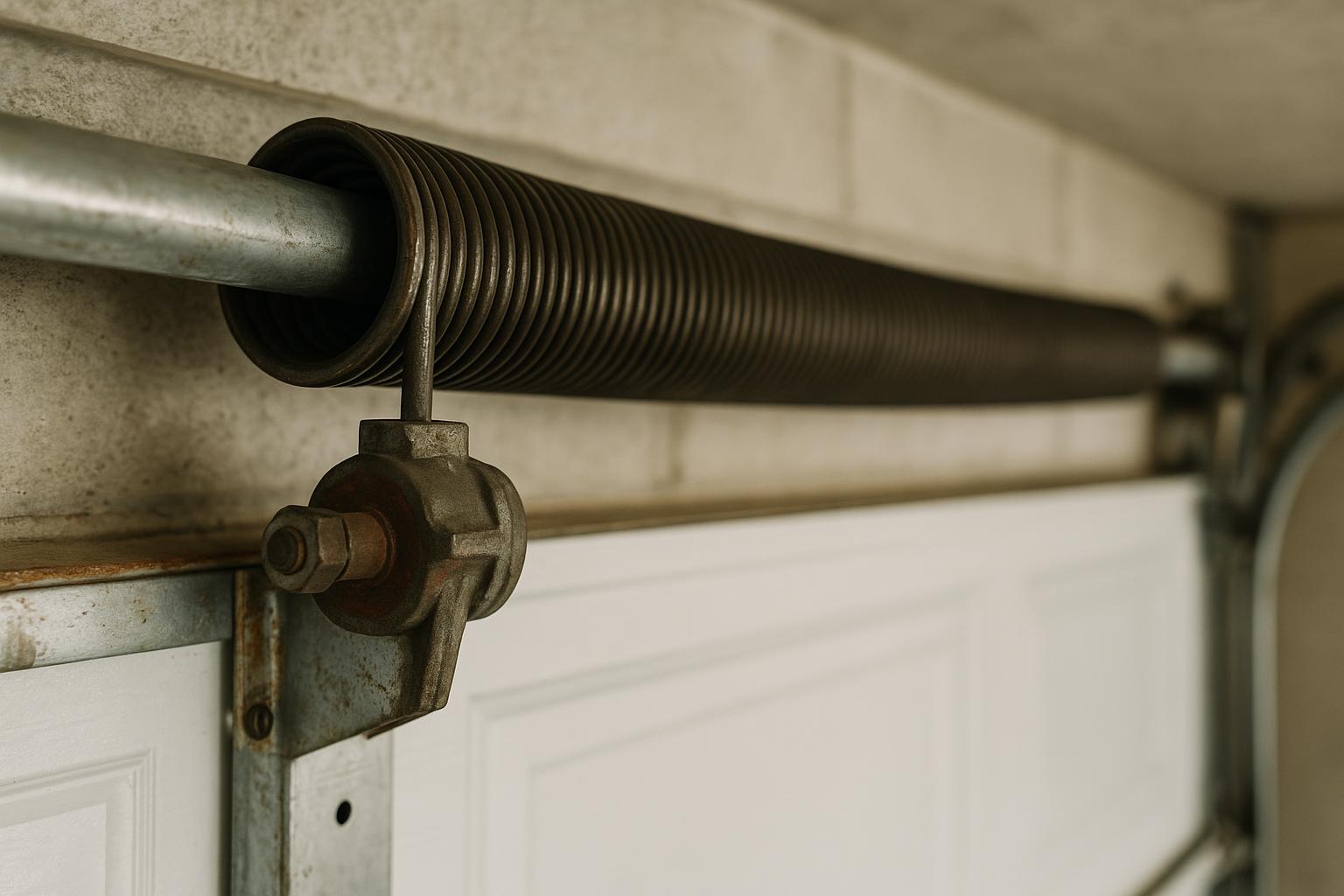
Your Garage Door Springs Are Doing More Work Than You Think
Every time you open or close your garage door, the springs are doing the heavy lifting — literally. A standard two-car garage door can weigh between 150 and 250 pounds, and without properly functioning springs, your opener alone can't handle that load. Springs counterbalance the weight of the door, making it possible to open smoothly and safely.
But like any mechanical component under constant stress, garage door springs wear out over time. For homeowners in Mohnton and the surrounding Berks County area, understanding the lifespan of your springs — and recognizing the warning signs of failure — can save you from an unexpected breakdown, costly damage, or even a safety hazard.
How Long Do Garage Door Springs Actually Last?
The lifespan of a garage door spring is measured in cycles. One cycle equals one full open and one full close of the door. Most standard torsion springs are rated for approximately 10,000 cycles, which translates to roughly 7 to 10 years of typical residential use.
However, several factors can shorten or extend that lifespan:
- Frequency of use: If you use your garage door as your primary entrance — opening and closing it four or more times a day — your springs will wear out faster than average.
- Climate and temperature swings: Here in Mohnton, we experience significant temperature changes between seasons. Cold winters cause metal springs to contract and become more brittle, which accelerates wear and increases the risk of snapping.
- Maintenance habits: Springs that are regularly lubricated and inspected tend to last longer than those that are neglected.
- Spring quality: Not all springs are created equal. Higher-cycle springs (rated for 20,000 or even 25,000 cycles) are available and can last significantly longer, though they cost more upfront.
Torsion Springs vs. Extension Springs: What's the Difference?
There are two main types of garage door springs, and knowing which type you have helps you understand what to expect when it's time for replacement.
Torsion Springs
Torsion springs are mounted on a metal shaft directly above the garage door opening. They use torque to lift the door and are the more common type found in modern garage door systems. Torsion springs are generally considered safer and more durable, and they provide smoother, more balanced operation.
Extension Springs
Extension springs run along the horizontal tracks on either side of the door. They stretch and contract to counterbalance the door's weight. Extension springs are more common in older installations and on lighter, single-car doors. They typically have a shorter lifespan and can be more dangerous when they break because they're under significant tension and can snap outward if safety cables aren't installed.
Regardless of which type you have, both require professional handling when it comes time for replacement. Garage door springs are under extreme tension, and attempting a DIY replacement without proper tools and training can result in serious injury.
Warning Signs Your Garage Door Springs Are Failing
Springs rarely fail without giving you some advance warning. Here are the most common signs that your springs are nearing the end of their life:
- The door feels unusually heavy: If you disconnect the opener and try to lift the door manually, a door with worn springs will feel significantly heavier than normal. A properly balanced door should stay in place when lifted halfway.
- Visible gaps in the spring coils: When a torsion spring is nearing failure, you may notice gaps or stretched sections in the coil. This is a clear sign the spring has lost tension.
- The door opens unevenly or crooked: If one spring is more worn than the other, the door may tilt to one side during operation. This puts extra strain on the opener, tracks, and cables.
- Loud bang from the garage: If you heard a loud bang coming from your garage — almost like a firecracker — and your door won't open, a spring has likely snapped. This is one of the most common calls we get from homeowners in Shillington, Wyomissing, and throughout the Reading area.
- The opener struggles or stops working: When springs lose their ability to counterbalance the door, the opener has to work much harder. This can cause the motor to overheat, the drive gear to strip, or the opener to stop functioning altogether.
- Jerky or uneven movement: A door that hesitates, jerks, or moves unevenly during opening or closing may have springs that are losing their tension inconsistently.
Can You Replace Just One Spring?
This is one of the most common questions we hear. Technically, yes — you can replace just the broken spring. But we strongly recommend replacing both springs at the same time, even if only one has failed. Here's why:
If both springs were installed at the same time, they've endured the same number of cycles. When one breaks, the other is likely close behind. Replacing both at once saves you from paying for a second service call in a few weeks or months. It also ensures the door is evenly balanced, which protects your opener and extends the life of the entire system.
How Much Does Spring Replacement Cost?
The cost of garage door spring replacement varies depending on the type of spring, the size and weight of your door, and whether you're replacing one or both springs. For most residential doors in the Mohnton area, homeowners can expect to pay somewhere between $150 and $350 for a professional spring replacement, including parts and labor.
At Mohnton Garage Door Repair, we provide upfront pricing before any work begins — no hidden fees and no surprises. We also offer higher-cycle spring upgrades for homeowners who want a longer-lasting solution.
Maintenance Tips to Extend Spring Life
While springs will eventually wear out no matter what, regular maintenance can help you get the most out of them:
- Lubricate your springs every few months with a silicone-based or lithium-based garage door lubricant. Avoid WD-40, which is a solvent, not a lubricant.
- Schedule an annual tune-up to have a technician inspect spring tension, balance, and overall condition.
- Test your door's balance periodically by disconnecting the opener and manually lifting the door to the halfway point. If it doesn't stay in place, the springs may need adjustment.
- Keep the tracks clean and free of debris. Obstructed tracks force the springs and opener to work harder.
Don't Wait for a Complete Failure
A broken garage door spring isn't just an inconvenience — it can leave your home unsecured, trap your car inside, or create a safety risk for your family. If you've noticed any of the warning signs mentioned above, or if your springs are approaching the 7 to 10 year mark, it's worth having them inspected.
Mohnton Garage Door Repair serves homeowners and businesses throughout Mohnton, Cumru Township, Kenhorst, and the greater Reading area. We offer fast response times, honest assessments, and professional spring replacement you can count on. Give us a call or reach out online to schedule an inspection — before a small issue turns into an emergency.